Interviewing Skills: How to Land the Career Opportunity
Anyone looking for career opportunity knows that the interview process often involves nail-biting uncertainty. Our thoughts may range from “I’ve got this!” to “I’m doomed!” Wavering confidence is normal in a competitive hiring market. Although we can look to the role description to understand expectations, usually there are aspects that are not spelled out clearly. We may wonder what exactly the employer is looking for, how we can best demonstrate our skills, what the culture is like and what will make us successful in this new role.
To help prepare you for a rigorous interview process that could result in a life-changing new career, we have outlined several tips and techniques to help you stand out from the crowd. Some of these you will know and others may stretch you to up your game. As you review these tips, take a moment for honest self-appraisal. You may even want to rate yourself on a scale from 1 to 5 for each item to determine where you should spend most of your energy. Like many things preparation is key for the interview process. The more time you spend deliberately planning your strategy the more confident you will be. The more confident you are, the more likely you will be successful. So, let’s get to it.
Interview Tips & Techniques
- Research the company and your interviewers. Thoroughly review the company’s website, social media posts and recent press releases. Make notes of the company information provided and your questions about it. Look up your interviewers in LinkedIn to understand their backgrounds, qualifications and length of time with the company. You may discover things you have in common and clues to what is important to them.
- Practice your answers to common interview questions. Prepare your answer to the common question: “Tell me about yourself, and why are you interested in this role with our company?” These answers should be concise and well-rehearsed to come off seamlessly. The idea is to quickly communicate who you are and what value you will bring to the company and the role—it’s your personal elevator pitch.
- Prepare work examples that demonstrate your competencies and experience. In addition to the common interview questions, most employers will use some form of Structured Interviewing or Behavioral Interviewing. These questions are aimed at determining if you have already successfully demonstrated required competencies or skills. For instance, the interviewer may say “Tell me about a time you had to confront a co-worker.” Hypothetical and general answers to this question will not get you high marks. Instead of saying you have done that many times and it always resolved positively, use the STAR method.
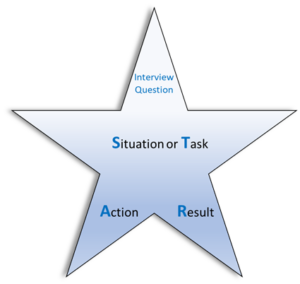 The STAR answer would sound like this: (Situation/Task) “Last year my team member failed to provide reports needed for a deadline.” (Action) “I prepared for the conversation I planned to have with my team member with my HR partner and scheduled the meeting. I addressed the situation calmly and thoroughly, showing my desire to understand her side.” (Result) “My team member confessed that she was overwhelmed and lost track of the deadline and will do everything she can to stay more organized in the future. It was a win/win result.”
- Tie your answers back to competencies and required skills. Employers often list competencies and skills required for strong performance in the job description. Take the time to correlate this list to your STAR examples to show the interviewer that you fully understand the role, the competencies and how they look when performed well. Remember that it’s not only about what you do, it’s how you do it.
- Recruit a friend to practice answering questions. Practicing your answers out loud is an incredibly effective way to prepare. You’ll find you gain confidence as you get used to saying the words.
- Prepare questions for your interviewers. Interviews are a two-way street. Employers expect you to ask questions. They want to know you’re thinking seriously about what it would be like to work there.
- Practice confident body language. Sit and stand tall with your shoulders back. Give a firm handshake.
- Be yourself. Let your personality shine through in the interview. Build a rapport with the interviewer with genuine good will and positivity. There is more to a hiring decision than a match of skills and experience. Being authentic during interview conversations can help employers easily relate to you. The interviewer’s ability to relate to you directly impacts their perception of your culture fit. Be honest even when it may reflect a weakness or deficiency in your skill set. Self-awareness is a sign of being coachable and having emotional intelligence.
- Keep your answers concise and focused. Your time with each interviewer is limited so be mindful of rambling. Practicing your answers beforehand can help keep you focused.
- Do not speak negatively about your previous employers or peers. Companies want to hire problem solvers who overcome tough situations. If you’re feeling discouraged about your current employment, focus on talking about what you’ve gained from that experience and what you want to do next.

