
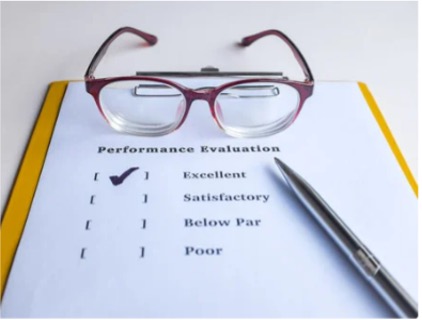
Performance Management practices around the world have been evolving over the last hundred years and yet we still aren’t getting the results needed. The survey results show an enormous gap between expectations of performance management and what it has delivered. While playing a critical role in business performance, performance management (PM) is intended to help employees improve their individual performance over time. We know it is necessary to receive feedback to improve performance, but it is unclear whether performance ratings assist in this process or deter it. Corporate Executive Board, a management research group, says that “95% of managers are dissatisfied with their Performance Management systems, and 90% of HR heads believe they do not yield accurate information” (Rock, Davis & Jones, 2014).
Do ratings tell us we have improved?
Moving the needle in company key performance metrics is an indication of company success. Yet, does the change in metrics tell the true performance story at the group or individual level? Receiving high ratings may feel good, but how well do they motivate us or inform our progress? HR researcher Josh Bersin says most multi-national companies are moving away from traditional PM processes, and some of them have abolished ratings altogether.
Carrots and sticks encourage a fixed mindset
According to neuroscience experts, ratings don’t motivate employees to improve or reach their personal best. Instead, they act as carrots and sticks – extrinsic motivation like pay or benefits. The carrot and stick ideology, where pay increases are dangled in front and numerical ratings and criticisms are applied behind, is being blamed for negative impact to ALL employees – including those who get positive reviews. Typical PM systems use a 1 – 5 scale to force rank people into categories, causing employees to disengage. Rock describes this as a “fight or flight” response in the amygdala, the same survival instinct one would have if physically threatened. This creates immediate disengagement. The rating score does not tend to open employee’s minds. It tends to close them.
According to author and researcher Carol Dweck, this is because a rating tells our minds that we are encapsulated and defined by the rating making us feel a sense of mental paralysis. This describes what Dweck calls a fixed mindset: the belief that we cannot rise above what we feel is our innate capacity for intelligence and other abilities. Furthermore, knowing that others are ranked higher provokes a “brain hijack” that prevents true understanding of weaknesses and need for improvement.
In contrast, a growth mindset holds that people learn, grow and improve their lives. Dweck asserts that it is our beliefs about ourselves – in either a fixed or growth mindset – that determine the trajectory we set for ourselves. Dweck states that most experts agree, it’s not nature or nurture that determines our potential, it’s both. The fixed mindset looks at every situation to evaluate whether we will fail or succeed, be accepted or rejected, feel like a winner or a loser. In this scenario, ratings are a threat as they may reveal inadequacies and show that we are not up to the task. This is the mindset that is reinforced by most PM systems today.
Employees want continuous feedback
So how do we evaluate employees if ratings are counter-productive? Rock et. al suggest that ratings should be abandoned in favor of a structured feedback process that supports a growth mindset and inspires people to seek out their highest potential. Feedback is the key link for the growth mindset and for engagement. An ongoing review gives employees ongoing feedback as needed—often at weekly cadences. These frequent conversations let employees know how they’re performing right away, so they can adjust behaviors as needed. Continual feedback helps employees track goals and objectives while providing an updated basis for making improvements.
Strong employee engagement and motivation is critical to business results. Every action you take should keep these imperatives in mind—especially when managing performance. The best performance management strategies motivate employees and strengthen engagement. By recognizing good work, incorporating manager coaching, connecting employees to broad organizational goals, and empowering employees, you can drive performance in an engaging way.
Don’t let annual reviews hinder your employees’ performance. Take advantage of regular performance conversations to engage and motivate your employees. If you haven’t already, take your first step to implement continuous feedback today by contacting VisionCor. Our leadership consultants provide you the knowledge and expertise to jumpstart continuous feedback in your organization. Let us partner with you to provide training that ensures open, honest dialogue at all levels of the organization that improves work quality, productivity level, engagement and overall work satisfaction.

